U.S. elections are administered through a decentralized system. State law sets much of the framework, and local officials usually run elections, according to the U.S. Election Assistance Commission. Federal law also applies. The Constitution gives Congress power over regulations for congressional elections; that authority is distinct from operating a local polling place.
Who administers an election on the ground?
The Election Assistance Commission's Voter FAQs describe state chief election officials as having oversight or advisory responsibilities. Elections are usually administered by counties, although cities or townships perform that role in some states. The arrangement can also vary within a state.
The EAC describes more than 10,000 election jurisdictions across the country. Some are small towns; others serve millions of registered voters. An election office may be a department, a board or a commission, and some jurisdictions combine responsibilities across more than one entity.
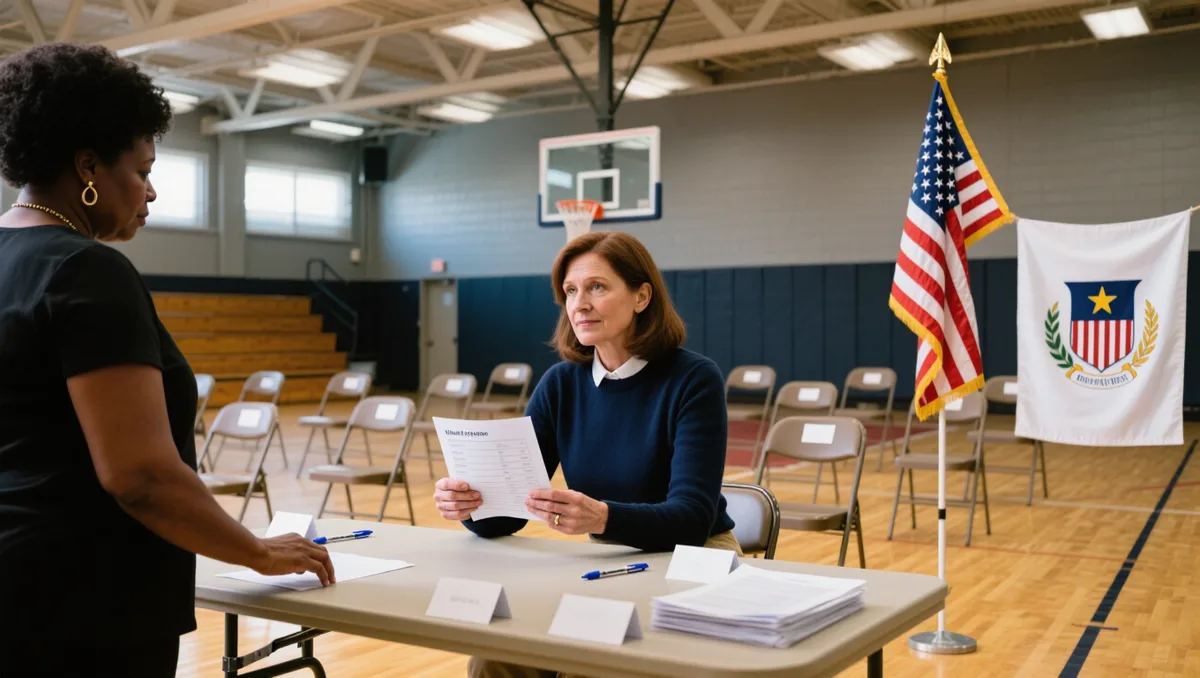
Poll workers perform another set of tasks. The EAC lists checking in voters, issuing ballots and helping voters among their duties, alongside opening and closing polls and reconciling voter and ballot counts. They are typically trained by local election officials. That work is different from writing the law those officials implement. For related coverage, see One Alabama Tenure Law, Three Different Answers From Universities.
What does the Constitution say about congressional elections?
Article I, Section 4, Clause 1 addresses elections for senators and representatives. In the National Archives transcription of the Constitution, the clause assigns state legislatures the initial regulation of the times, places and manner of those elections. It also permits Congress to make or alter such regulations by law, with the stated exception concerning the places of choosing senators.
The scope matters: this is a clause about congressional elections. It shouldn't be presented as a single description of every rule for presidential elections, state contests and local offices. Those are separate questions that require their own applicable sources.
Nor does the clause's allocation of lawmaking authority describe who staffs a particular election office. Legal authority over a rule and administrative responsibility for carrying out an election are related, but they aren't interchangeable.
What does the Election Assistance Commission do?
The EAC's account of its role traces the independent, bipartisan commission to the Help America Vote Act of 2002. Its work includes election-administration guidance, information sharing and assistance connected to federal election legislation. The commission is also involved in voting-system testing and certification.
Its Voter FAQs state that the EAC doesn't have general regulatory oversight of elections. An agency offering guidance or administering a federal program shouldn't therefore be described as the office that runs every election in the country.
The practical consequence is to identify the institution before describing its authority. A federal agency's guidance, an act of Congress and a county election office's administrative action are different documents from different decision-makers. Any claim about a change in control needs the specific action and the legal authority being asserted. We covered a connected angle in Voting Rights Act Section 2: The Gingles Test in Plain Language.
Where should a voter check a current rule?
The EAC directs readers to their local election office for practical registration and voting information and provides links to state and territorial election websites. Because jurisdictions differ, a national explainer can't supply a universal deadline or polling-place answer.
This article describes institutional roles. It makes no finding about a current dispute or allegation of misconduct. For an actual registration date, ballot procedure or polling location, the relevant election authority's current instructions are the place to check.
Information, not legal advice.