How a Bill Actually Dies in Committee
Most legislation is never defeated on a floor vote — it expires through referral, calendars, and inaction, by design.
Christopher Lee
Extended analysis of political cause and effect: how coalitions form and break, why a governing party loses support, where institutional design blunts a mandate. Arguments are built from results, roll calls and comparative cases. Intended for analysts, academics and readers who want reasoning instead of reaction.
Longer arguments about why a political outcome occurred, from coalition arithmetic to incumbency effects, grounded in results data rather than commentary.
Most legislation is never defeated on a floor vote — it expires through referral, calendars, and inaction, by design.
Christopher Lee
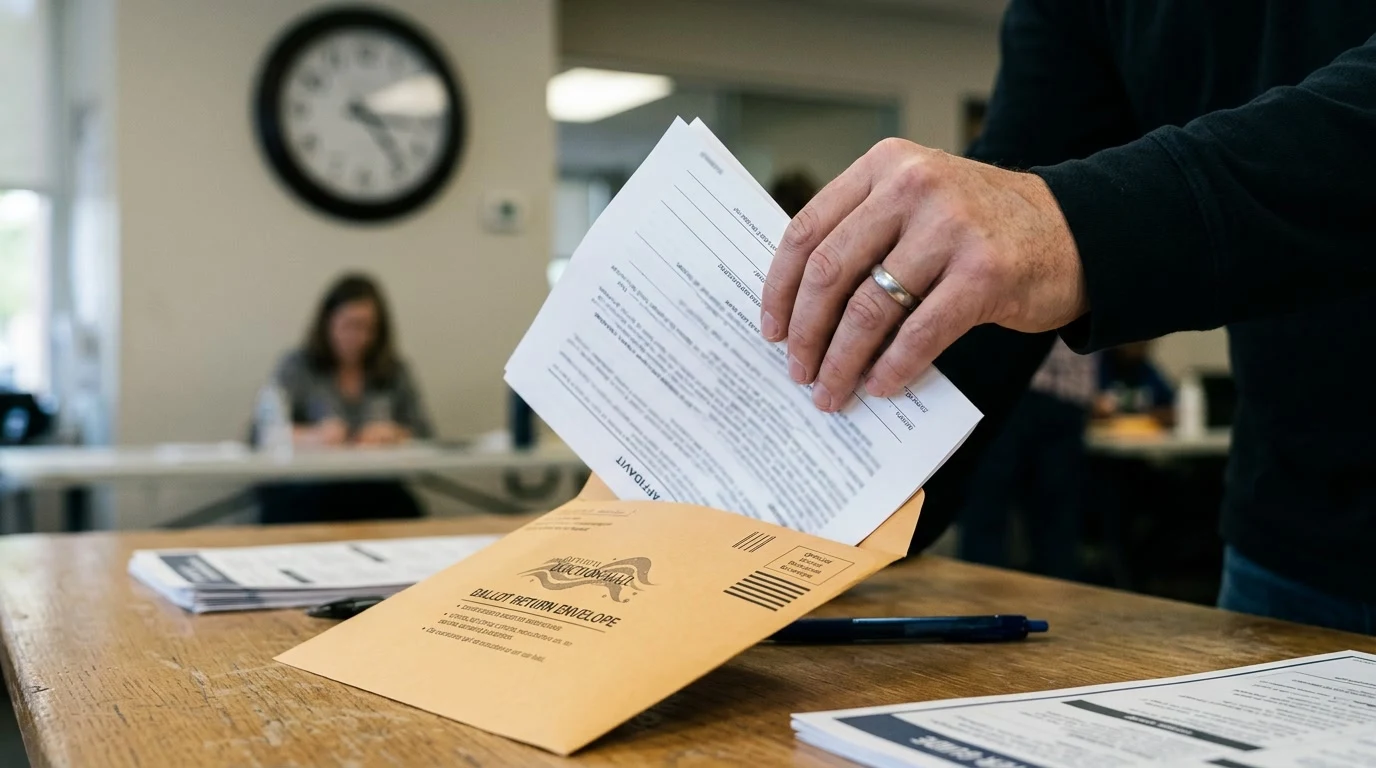
A missing or mismatched signature does not automatically disqualify a mail ballot. Curing is the fix — and the deadline to use it is measured in hours, not weeks.
Christopher Lee
Twenty-six states and Washington, D.C. require a recount without a candidate asking for one, but the margin that triggers it, and who pays when it doesn't, differs by statute in every state that has one.
Christopher Lee
Every state wants relevance, so the calendar compresses — and the parties' rules committees, not the states, hold the brake.
Christopher Lee
The legal fights now target the local officials who sign the canvas — and states have spent the years since 2020 rewriting the rules those officials operate under.
Asha Venkataswamy