Small claims court is a simplified court that handles modest money disputes without lawyers, formal pleadings or a jury. You file a short form, serve the other party, show up with your evidence and explain your case to a judge in minutes rather than months. The trade-off is real: the dollar limits are low, the rules vary by state, and you generally cannot appeal as freely as in a regular civil case.
The name carries the whole idea. The word small is the operative one — small dispute, small stakes, small procedure — and the court is built around that. It exists so that a tenant fighting over a deposit or a homeowner chasing an unpaid repair bill does not need to hire counsel or master civil procedure. What follows is the general shape of the process; the exact dollar caps, fees and deadlines are set by each state, so check your own court's rules before you file.
What kinds of disputes belong in small claims court?
Small claims courts handle straightforward claims for money: unpaid invoices, security deposits, damage to property, shoddy work, a personal loan someone never repaid. The key limits are two. First, the amount you ask for must fall under your state's cap, which varies widely, so confirm the figure on your court's website or with the clerk. Second, the court generally awards money, not orders — a judge can make someone pay you, but usually cannot order a landlord to fix a heater or a contractor to redo a job. For related coverage, see What is a Plea Bargain — Plea Bargains Explained: Why Most Cases Never Reach Trial.
Some claims do not belong there at all. Family-law matters, probate and most disputes against the government have their own tracks. If your claim is really about conduct rather than money, or the amount at stake dwarfs the cap, a regular civil suit or a different court is the better fit. Clerks can tell you what their court handles; many will not give legal advice but will confirm jurisdiction and forms.
How do you file a small claims case?
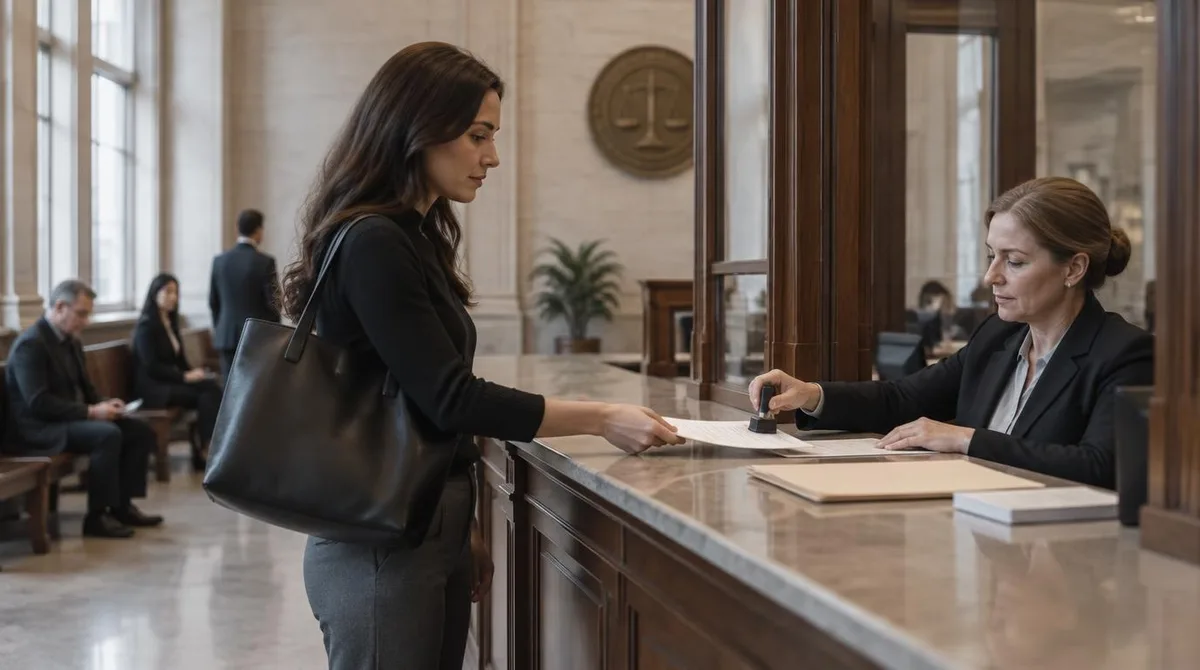
Filing starts with a short form — often called a claim or complaint — that states who owes you, how much and why, in plain sentences. You name the defendant exactly, using the legal name of a person or a registered business, because a case against the wrong name can be dismissed. The clerk files it, collects a filing fee and issues your case a number and a hearing date.
Practical steps before you walk to the counter:
- Gather your documents first: contracts, receipts, texts, photos, invoices, the canceled check. You will need them for the form and again at the hearing.
- Write a demand letter and send it before filing. Many states require or expect one, and it sometimes resolves the dispute without a court date.
- Confirm the defendant's correct legal name and address. Service fails most often on a bad address.
- File the form, pay the fee and keep every stamped copy you are given.
Filing fees are modest by court standards, and many courts offer fee waivers for low-income filers — ask the clerk what the local form looks like. Courts in most states let you file by mail or online now, but the paperwork is the same either way.
What does 'service of process' mean and why does it matter?
Service of process is the formal delivery of your claim to the defendant — the step that gives the court power over them. Until the defendant is served correctly, the case cannot move. Courts treat this strictly, because notice is a constitutional requirement: a person cannot be judged without fair warning.
Service methods vary by state. Common options include personal delivery by an adult who is not a party, certified mail with a return receipt, a sheriff's civil process unit for a fee, or a licensed process server. After service, the person who served — or the server — files proof with the court, usually called an affidavit or proof of service. If the defendant dodges service, tell the clerk; courts have substitute methods, but you must use the approved one. A case built on flawless evidence can still die on bad service, so treat this step as seriously as the hearing itself.
What evidence should you bring to the hearing?
Bring originals where you have them, plus copies for the judge and the other side. The strongest small claims evidence is documentary: a signed contract, an itemized invoice, dated photographs, a bank record showing the payment that never arrived. Texts and emails help when they show the other side admitting the debt or the damage. Witnesses matter too — a neighbor who saw the accident, the inspector who flagged the defect — but a witness who merely repeats your account adds little.
Organize the file in the order of your story: agreement, performance, problem, demand, refusal. Label each exhibit. Judges see many cases in a session; the litigant who can put the right paper in front of them in seconds has an advantage no argument can replace. Our analysis from watching how these hearings run: the winning difference is rarely eloquence. It is whether the documents line up with the story.
What happens when you stand before the judge?
A small claims hearing is short and informal. The judge calls the case, swears in the parties and hears the plaintiff first, then the defendant. Each side tells its story, presents documents and answers questions. There is no jury, no court reporter in most courts and no strict rules of evidence, though hearsay and irrelevance still get cut off. Dress like it matters, arrive early and address the judge as 'Your Honor'.
Know what you are asking for, state it in one sentence, then walk through the documents. Do not interrupt the other side; write your points down and answer them when it is your turn. The judge may rule from the bench or take the case under advisement and mail a decision. If you win, the judgment is a court order to pay — but collecting it is a separate process, through garnishment, levy or a lien, under your state's rules. A judgment in hand is not money in the bank until you execute on it.
What should a first-timer do before filing?
Slow down once, before you speed up. Read your state's small claims cap, fee schedule and service rules on the official court website. Confirm the defendant's legal identity. Send the demand letter and keep a copy. Decide honestly whether the amount at stake justifies your time, because you cannot collect more than the cap and fees rarely come back even when you win. For readers who want the fuller picture of how civil cases get built before a trial, our explainer on What Does a Lawyer Do Before Trial? The Work Nobody Sees shows the preparation work that small claims compresses into an afternoon.
Small claims court rewards preparation and punishes shortcuts. The person who reads the local rules, names the right defendant, serves them properly and arrives with a labeled folder usually does not need a lawyer. That is the design, and it works — for those who do the page-47 reading first. For more coverage of courts and legal process, see the Law section.