What does a lawyer do before trial? In short: everything. A lawyer builds the case through discovery, questions witnesses under oath in depositions, files pretrial motions to narrow the dispute, and — in most matters — negotiates an outcome so the case never reaches a courtroom. The trial is the rare exception, not the plan.
That preparation is the real work of litigation. By the time a judge calls a case, the issues have been framed, the evidence has been exchanged and tested, and both sides know the weaknesses in their own file. This piece walks through that sequence in plain language, and links it to how cases actually end.
It sits within the publication's broader law coverage, which explains the machinery of courts and legislation rather than the headlines alone.
What is discovery, and why does it take so long?
Discovery is the formal exchange of information between the parties. Each side can demand documents, send written questions (called interrogatories) and require the other side to admit or deny specific facts. The point is simple: no ambush. Both sides should walk into trial knowing what the evidence is.
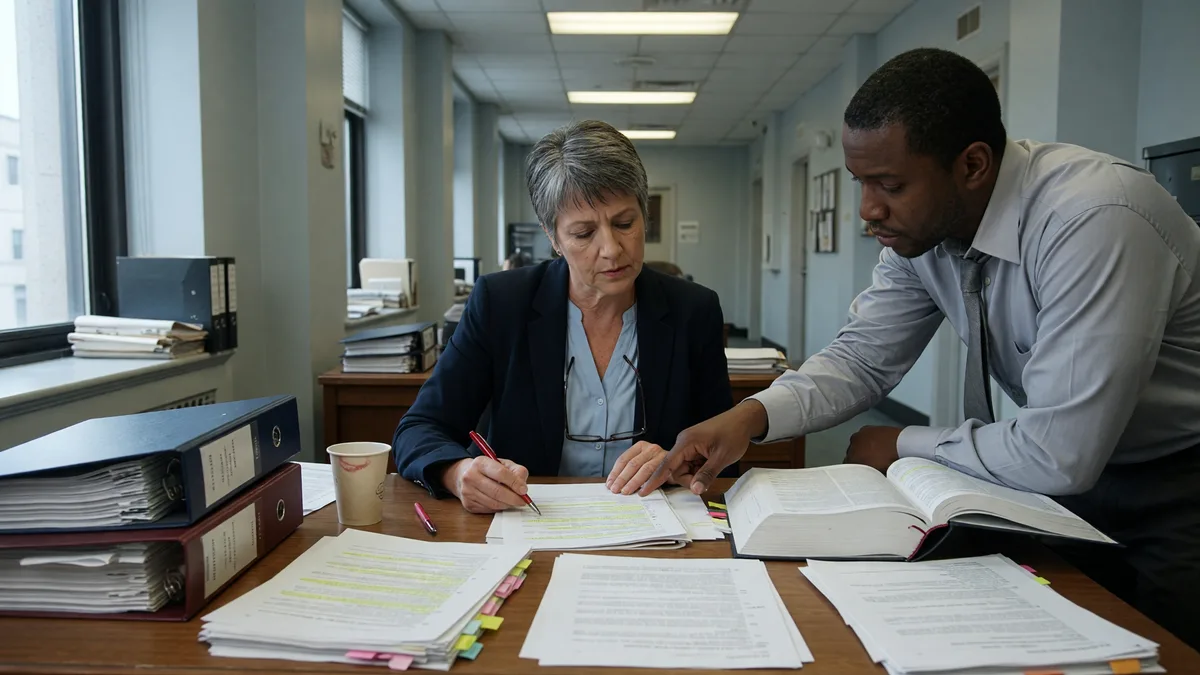
Discovery is also where the delay comes from. Document requests can sweep in years of emails, texts and internal records. Lawyers spend long hours reviewing that material, deciding what helps, what hurts and what must be turned over. Disputes are common — one side says a request is too broad, the other says it is essential — and those fights go back to the judge, which adds more time.
The pace frustrates clients, but the design has a purpose. A case decided on evidence both sides have actually seen is more reliable than one decided on surprise.
What happens in a deposition?
A deposition is sworn testimony taken before trial, with a court reporter recording every word. The lawyer questions a witness in person — sometimes for hours — and the other side's lawyer is present to object. It is essentially a dress rehearsal for testimony, held in a conference room rather than a courtroom.
Lawyers use depositions for three jobs. First, to find out what the witness actually knows, in the witness's own words. Second, to lock that testimony in: the transcript can be used at trial if the witness's story changes. Third, to test the witness — a hostile or evasive answer in a deposition tells a lawyer how that person will perform in front of a jury.
Preparation cuts both ways. Before a client sits for a deposition, the client's own lawyer spends significant time explaining what to expect, how to answer truthfully and briefly, and what documents the client should review first. A poorly prepared deposition can damage a case more than almost anything else in the pretrial phase.
What do pretrial motions actually do?
Motions are written requests to the judge, and before trial they do the shaping. A motion to exclude evidence keeps weak or improperly obtained material away from the jury. A motion for summary judgment asks the judge to end the case without a trial, on the ground that no genuine dispute of material facts exists — that a reasonable jury could only decide one way.
Lawyers also file motions in limine, which ask the judge to bar specific arguments or references at trial — for example, information that is prejudicial or irrelevant. These motions are argued in hearings, on paper and sometimes aloud, and the rulings define the battlefield. Some cases end here entirely, when a judge grants summary judgment.
For readers following how courts handle group claims, the same pretrial filtering logic appears in class litigation, which the publication has explained in How a Class Action Gets Certified: Rule 23's Four Hurdles.
Where does the negotiation happen?
Negotiation runs underneath everything else. Settlement talks in civil cases, and plea discussions in criminal cases, happen at every stage — often quietly, between lawyers, with no filing and no hearing. The pretrial record built through discovery and depositions is what gives those talks their leverage: a party who has seen the other side's evidence can price its own risk realistically.
The publication has covered how this resolves most criminal matters in Plea Bargains Explained: Why Most Cases Never Reach Trial. The same dynamic holds in civil litigation. A strong deposition transcript or a damaging document is often worth more in a negotiation than it would be in front of a jury, because it changes what the other side thinks will happen.
What this means for a client is straightforward: the quality of pretrial preparation is usually the quality of the settlement. The lawyer who knows the file cold can advise honestly about the odds. The lawyer who does not is guessing.
What does the lawyer do in the final weeks?
The last stretch before trial is logistics and strategy compressed into one period. The lawyer prepares a witness list and an exhibit list, drafts the questions for direct and cross-examination, and builds the opening statement around the evidence the judge has allowed in. Experts — the specialists a side hires to explain technical matters — are prepared for their own testimony.
Jury selection, called voir dire, also gets its own preparation. The lawyer drafts questions designed to identify bias, and decides which prospective jurors to challenge. None of this is improvisation; by the trial date, most of what will be said has already been written down.
Our analysis: why the invisible work matters to the public
The pretrial phase is where the court system does most of its real decision-making, and it deserves the same scrutiny as verdicts. Discovery rules determine what the public learns in litigation over public programs, contracting and official conduct. Motion practice determines which claims survive at all. Negotiation determines how the overwhelming share of disputes actually end.
Readers who follow how cases move through the system — from filing to the filters described here — will find the pattern again at the appellate level, in the publication's explainer on How a Case Reaches the Supreme Court: The Cert Petition Gauntlet. At every stage, the same truth holds: the visible proceeding is short, and the preparation behind it is long.
What remains unknown in any individual case, until the record is public, is exactly what the parties found in discovery and what each side offered in negotiation. That privacy is deliberate. But it is also why the trial, when one finally happens, is best understood as the tip of a very large file.