What is Section 2 of the Voting Rights Act? It is the provision, 52 U.S.C. § 10301, prohibiting any voting practice that results in minority voters having less opportunity than others to elect candidates of their choice — a «results test» Congress adopted in 1982 precisely to reach practices that are discriminatory in effect without proof of discriminatory intent. It is enforceable by private plaintiffs as well as the Attorney General, and virtually every racial vote-dilution and districting lawsuit of the last four decades — including the map wars of the 2020s — has been brought under it.
What are the three Gingles preconditions?
In Thornburg v. Gingles (1986), the Supreme Court held that a vote-dilution claimant must first show: (1) the minority group is sufficiently large and geographically compact to constitute a majority in a reasonably configured single-member district; (2) the minority group is politically cohesive; and (3) bloc voting by the majority usually defeats the minority's preferred candidates. Only after all three does the court weigh the «totality of circumstances» — the Senate factors, named for the Judiciary Committee report that enumerated them — including the history of discrimination, the extent of racially polarized voting, candidate slating processes, and the responsiveness of elected officials to minority needs.
How do the preconditions work in map cases?
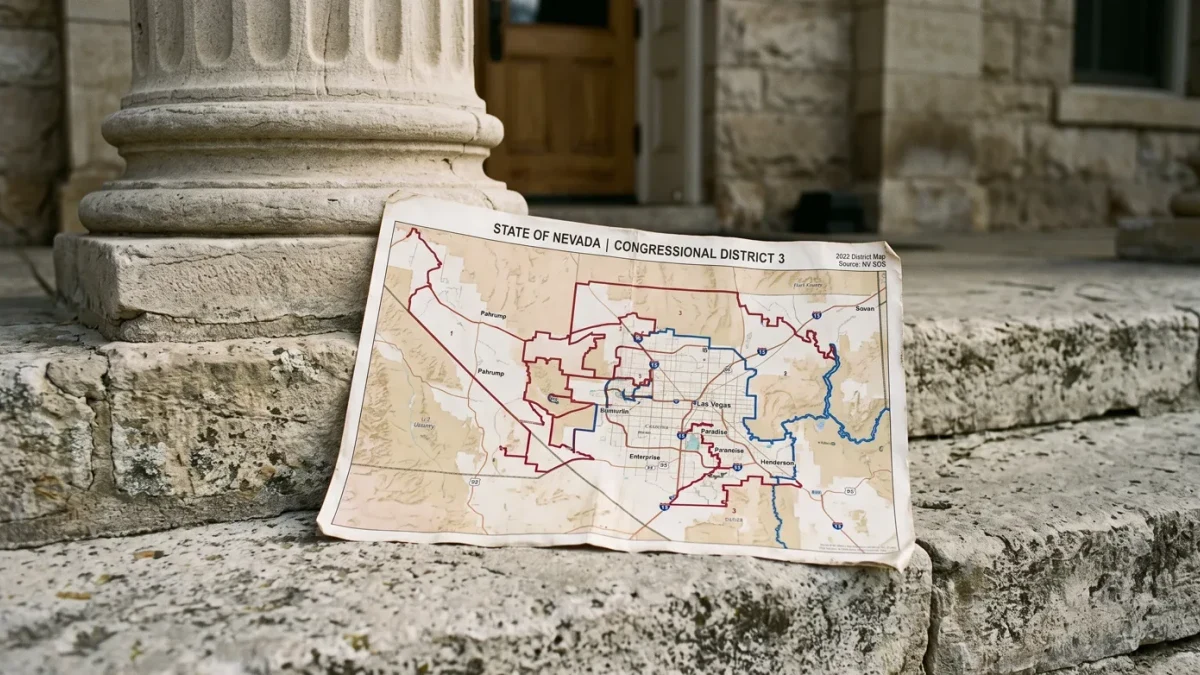
Geographic compactness is the gate that decides most redistricting litigation: if the minority population can form a majority only in a district snaking across the state, courts will not order one drawn — a limit that shaped the 1990s' strange-looking majority-minority districts and their later dismantling in Shaw v. Reno-line racial-gerrymander cases, which police race as the predominant factor in a way Section 2 does not. The two sides of that doctrine pull against each other: Section 2 sometimes requires considering race to draw a district; the Shaw line forbids subordinating traditional principles to race. Mapmakers live in the space between.
What has the modern Court added?
- Bartlett v. Strickland (2009): the first Gingles precondition requires the minority to be a true majority of a district, not merely influential — coalitional claims fail.
- Abbott v. Perez (2018) and Allen v. Milligan (2023): in Milligan, the Court surprised many observers by holding Alabama's congressional map likely violated Section 2, reaffirming the Gingles framework's vitality — the decision that drove several Southern states' mid-decade redraws.
- Private right of action: after the Eighth Circuit held in 2023 that only the Attorney General can enforce Section 2 within that circuit, the question of private enforcement has become live circuit law — a split the Supreme Court has so far declined to resolve, leaving different rules in different states.
Section 2 versus Section 5
Section 5 — the preclearance regime requiring covered jurisdictions to obtain federal approval for voting changes — was rendered inoperative by Shelby County v. Holder (2013), which struck down the coverage formula. Section 2, by contrast, applies nationwide and requires case-by-case litigation after the fact. Congress's repeated attempts to restore preclearance with a new coverage formula have not become law, so Section 2 lawsuits remain the only federal dilution remedy in operation.
Why Section 2 dominates 2026 docket watchers' calendars
Because redistricting litigation has a fuse: mid-decade map changes triggered by Milligan-line cases, state constitutional claims, and partisan-branch battles all now funnel through Section 2's Gingles evidence — racially polarized voting analysis, redrawn districts, special-master proceedings. Each redraw shifts the battleground for the next election, and the 2026 cycle's maps in several states will be whatever the courts last approved.
FAQ
Does Section 2 require minority-majority districts?
Not automatically — only where the three Gingles preconditions and totality of circumstances show dilution in a jurisdiction where a compact majority district could be drawn.
What are the Senate factors?
The list of circumstances courts weigh under the 1982 amendments — from history of discrimination to the extent of racially polarized voting.
Can private groups still sue under Section 2?
In most circuits yes; the Eighth Circuit's 2023 rule barring private suits remains a live, unresolved split.