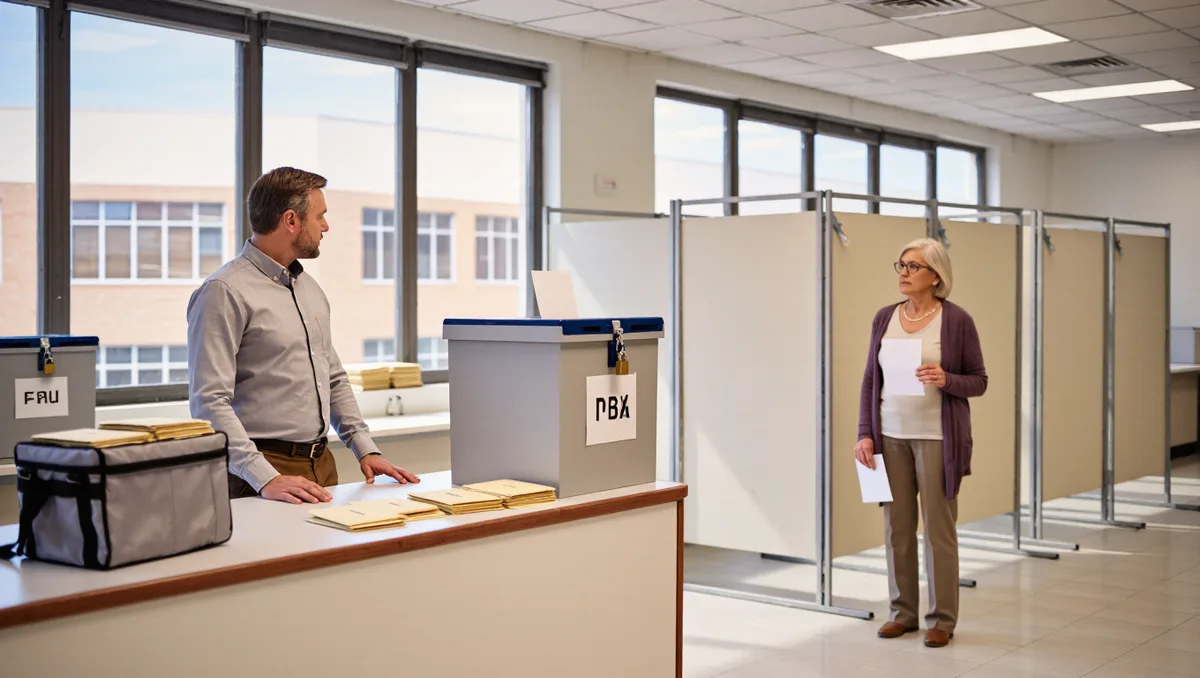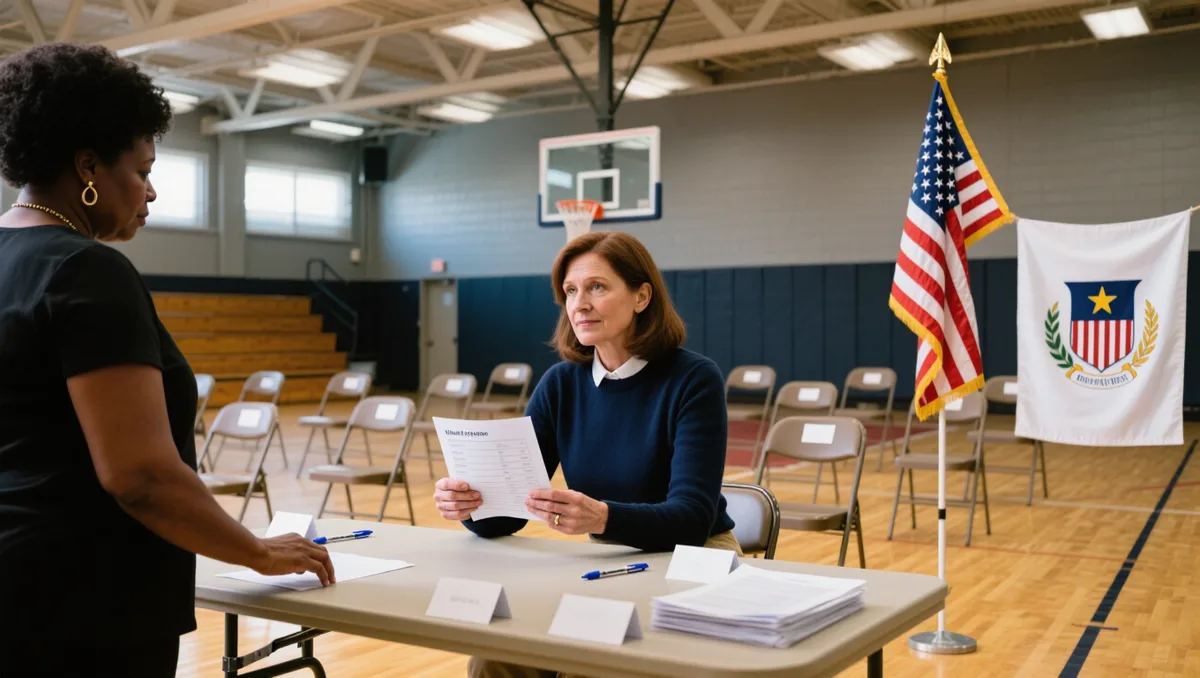
Picture two neighbors in the same town, same party, same election year. One votes for a nominee by walking to a school gym, signing in, and filling in a bubble. The other has to show up at a set hour, stand in a room for hours, and publicly declare a preference — sometimes by physically moving to a corner of the room. Both are choosing the same party's nominee. The rules that separate them are the difference between a primary and a caucus.
A primary is a state-run or party-run election: ballots, polling places, and a private vote counted like any other. A caucus is a meeting: party members gather in person, discuss, and organize themselves into preference groups, often over several hours on a single weeknight. The practical upshot is that primaries reward candidates with broad, casual support, while caucuses reward candidates whose backers are committed enough to give up an evening. Most candidates now exit presidential contests before the primaries even conclude, and a number leave quickly after failing in the early rounds — a pattern documented in scholarly examples collected by Cambridge Dictionary usage corpora, which note how early losses clear the field.
That is why the format question is not trivia. The rules decide who can participate, how long the process lasts, and which kinds of candidates survive it. This explainer walks through the mechanics, the participation gap, and what each format asks of a campaign.
What exactly is a primary?
A primary is an election held to choose a party's nominees for the general election. Voters go to polling places or vote by mail, mark a ballot in private, and election officials count the results under the same machinery used in November. That machinery — registration checks, ballot custody, canvass and certification — is the reason primary results can usually be finalized on a predictable timetable.
Primaries come in several flavors. A closed primary limits participation to voters registered with that party. An open primary lets any voter choose a party's ballot, though a voter can generally pick only one party's ballot in a given election. Some states run nonpartisan or top-two formats where all candidates share one ballot. The label matters because it defines the electorate: a closed primary is decided by the party's most reliable identifiers, while an open one can pull in independents and even crossover voters. This connects to our earlier piece, June's Two Primary Waves Set the Fall's Biggest Fields.
Who runs the show also differs. State governments administer primaries in most cases, but party organizations hold real authority over delegate selection; as the Cambridge corpus examples note, state parties were left free to oversee their primaries, conventions, and delegate selection. That split — public funding and administration, private rules — is a recurring tension in election law, and it is one reason the same office can be nominated under very different procedures two states over.
What exactly is a caucus?
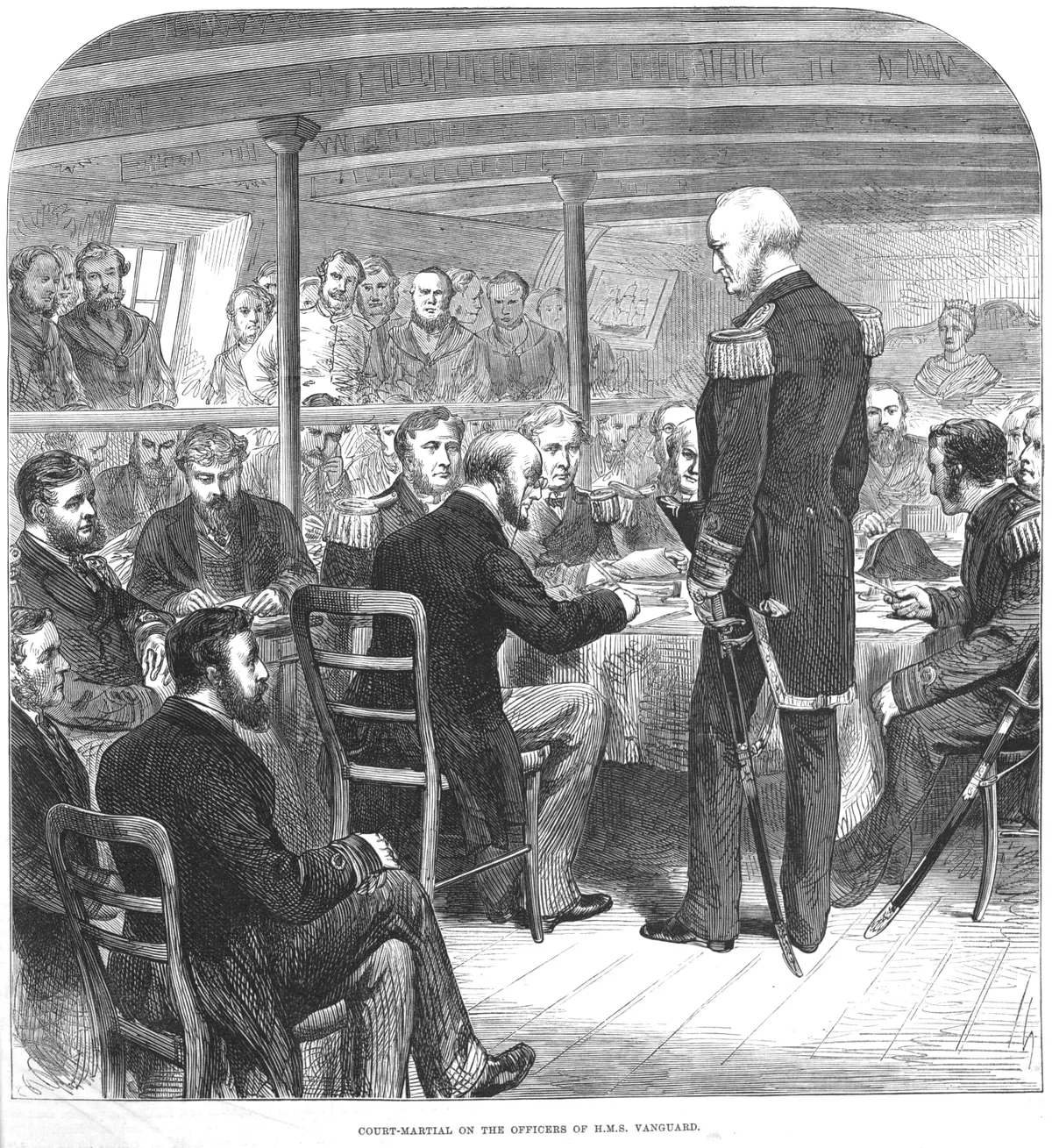
A caucus is a series of local party meetings rather than an election. Members convene at a fixed time — often a winter evening — and conduct party business in person: discussing candidates, forming preference groups, and electing delegates to the next tier of the process. In many caucus systems, participants' choices are public. You stand with your candidate's group, and neighbors can see where you stand.
Because a caucus is a meeting, it has thresholds and procedures rather than simple plurality counting. Support below a minimum share can mean your group is non-viable, and participants are invited to realign to a viable group — a negotiation that rewards persuasion and organization in a way a private ballot never does. The format favors candidates with intense, disciplined supporters and a ground operation that can turn people out at an exact hour.
The cost is participation. Anyone who works a night shift, cares for children or an elderly parent, travels for work, or simply cannot stand for hours in a crowded room is effectively excluded. That exclusion is structural, not incidental, and it is the core argument reformers make against caucuses.
Why does the format change who wins?
Three mechanisms do most of the work, and each one follows directly from the mechanics.
- Turnout composition. Primaries draw from the full registered electorate of a party; caucuses draw from those willing and able to attend a lengthy meeting. A candidate popular among casual, low-propensity voters does better in a primary. A candidate with a small but devoted corps does relatively better in a caucus.
- Visibility of choice. A private ballot hides peer pressure; a caucus meeting displays it. Social dynamics, neighborhood organizing, and in-room persuasion all move votes in a caucus in ways they cannot in a primary.
- Field clearing. Because early contests are decisive for momentum, candidates who lose them tend to drop out. The Cambridge corpus material observes that most candidates exit presidential contests prior to the conclusion of the primaries, and that a number leave quickly after failing in the early ones. A demanding early format can therefore thin the field faster than a gentler one.
There is a related scholarly debate worth knowing. Some researchers argue, counterintuitively, that the space between competing candidates is actually smaller when primaries are competitive — the idea that primaries necessarily push nominees to the extremes is contested. Others describe a centrifugal pull, where primary electorates draw candidates outward in ways general elections cannot fully reverse. Both positions appear in the Cambridge corpus examples, and honest coverage holds both at once: the effect is real to scholars who find it, contested by scholars who do not, and it varies with how competitive a given primary actually is.
How do the formats compare side by side?
| Feature | Primary | Caucus |
|---|---|---|
| Basic form | An election with private ballots | A series of in-person party meetings |
| Where and when | Polling places and mail ballots, usually across multiple hours or days | A single fixed meeting time, often a weeknight evening |
| Vote visibility | Secret ballot | Public preference, often by standing in groups |
| Time commitment | Minutes | Hours |
| Who it favors | Broad, casual support | Intense, organized support |
| Administration | Typically state election officials | Party organizations |
| Accessibility risk | Standard voting barriers | Structural exclusion of anyone who cannot attend in person |
What this means for voters and campaigns
For voters, the format dictates preparation. In a primary, the work is registration and research: know your state's participation rules before the deadline, because closed-primary states will not hand an unregistered voter a party ballot. In a caucus, the work is showing up — on time, for the duration, ready to speak and to be counted in a room.
For campaigns, the formats demand different machines. A primary operation chases name recognition and broad persuasion across a wide electorate. A caucus operation builds precinct-level networks and trains supporters on the meeting's procedures, because a supporter who does not understand the viability rules can waste a vote. Campaign budgets, staffing, and even candidate messaging bend around these demands.
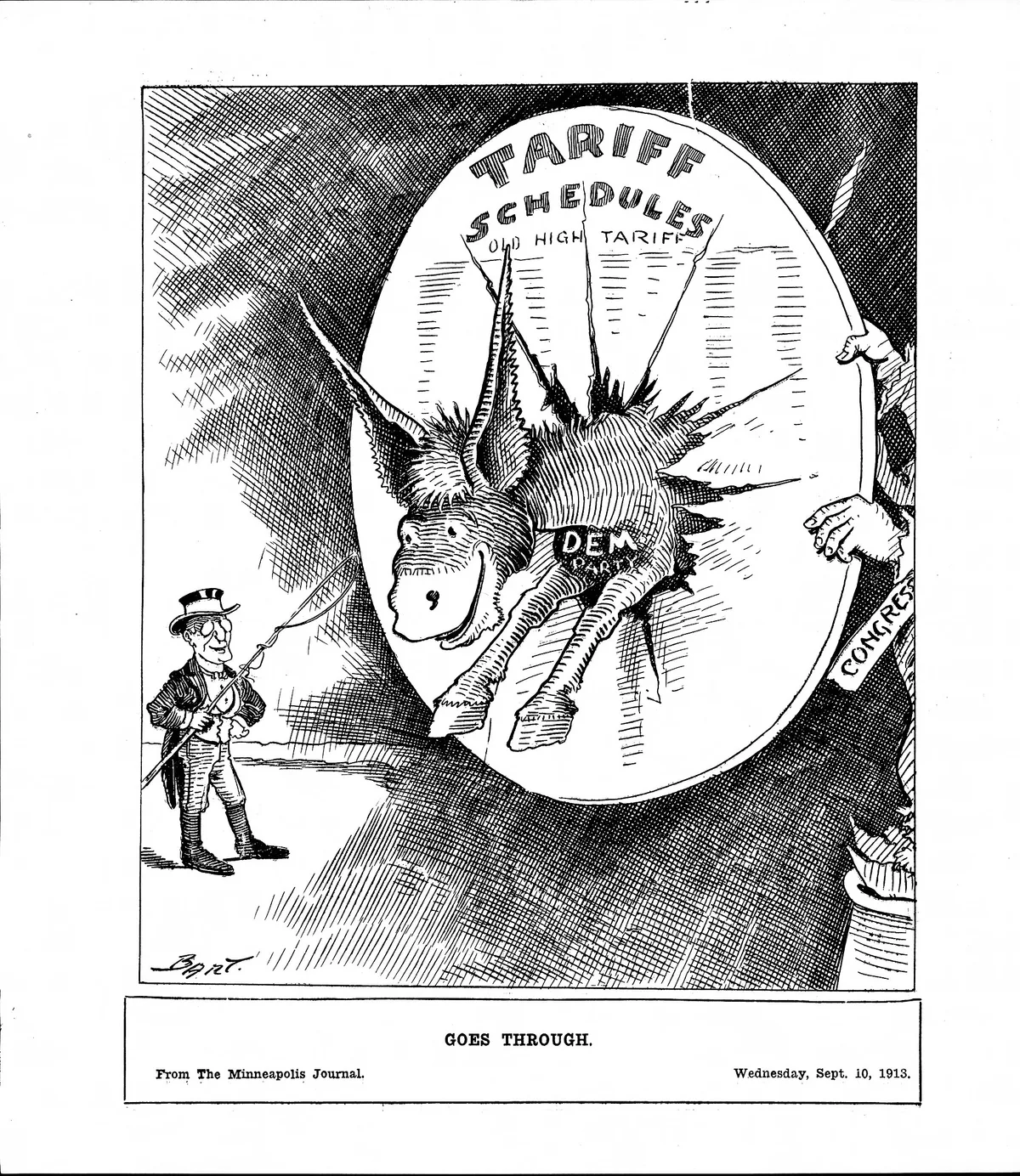
For the parties, the formats are a standing argument. Defenders of caucuses say meetings build local party strength and force candidates to face real members face to face. Critics say the participation barrier is disqualifying in itself, and note that even within primary law there are fights — the Cambridge corpus records objections that open primaries of all registered voters are not recognized as a nomination method in some party statutes. Reform debates tend to move states from caucuses toward primaries over time, while primary-format fights — open versus closed, and who pays — continue on their own track.
Our analysis: the single most useful question a voter can ask about any nominating contest is not who is winning, but who is allowed into the room. The answer explains most of what follows.
Where to watch the format play out in 2026
The current cycle offers live examples of how nomination mechanics shape the field. Wisconsin's spring primary ran February 17, opening the 2026 season, and Illinois counted the first partisan primary votes of the cycle in March. Later waves, including June contests in California and Nevada, set up the fall's biggest fields. Each state's format and calendar determine which candidates can realistically compete there. Readers following this should also see Illinois Opens the Partisan Season: First 2026 Primary Votes Counted.
Down-ballot contests follow their own rules too. A special election to fill a vacancy can require its own primary, as South Carolina's Senate vacancy math showed. And once votes are cast, the counting machinery — from ballot curing to certification deadlines — determines when a nominee is officially a nominee.
The evidence here establishes the mechanics and the participation trade-offs. What remains unsettled is the long-running empirical fight over how much each format pulls nominees toward or away from the center — a question scholars continue to test, and one that varies by state, party, and cycle.