How does a federal judge get confirmed? The president nominates, the Senate Judiciary Committee holds a hearing and reports the nomination, and the full Senate confirms by simple majority — 51 votes or 50 plus the vice president — after cloture, which itself requires 60 votes unless the nomination is executive or judicial, in which case a 2013 rules change allows a bare majority to end debate. The entire sequence, from vacancy to investiture, took a median of well over 100 days for circuit nominees in recent Congresses, per the Federal Judicial Center's nomination and confirmation records.
What starts the process?
Article II of the Constitution gives the president appointment power with the Senate's advice and consent. Practically, it starts earlier: senators of the president's party traditionally screen district-court candidates from their states, and for district judges the practice of «blue slips» — home-state senators' signed sheets returned to the Judiciary Committee — historically could hold a nomination in committee. Chairs have varied in how strictly they honor negative blue slips for district versus circuit seats, a procedural choice that reshapes each president's confirmation math.
What does the Judiciary Committee actually do?
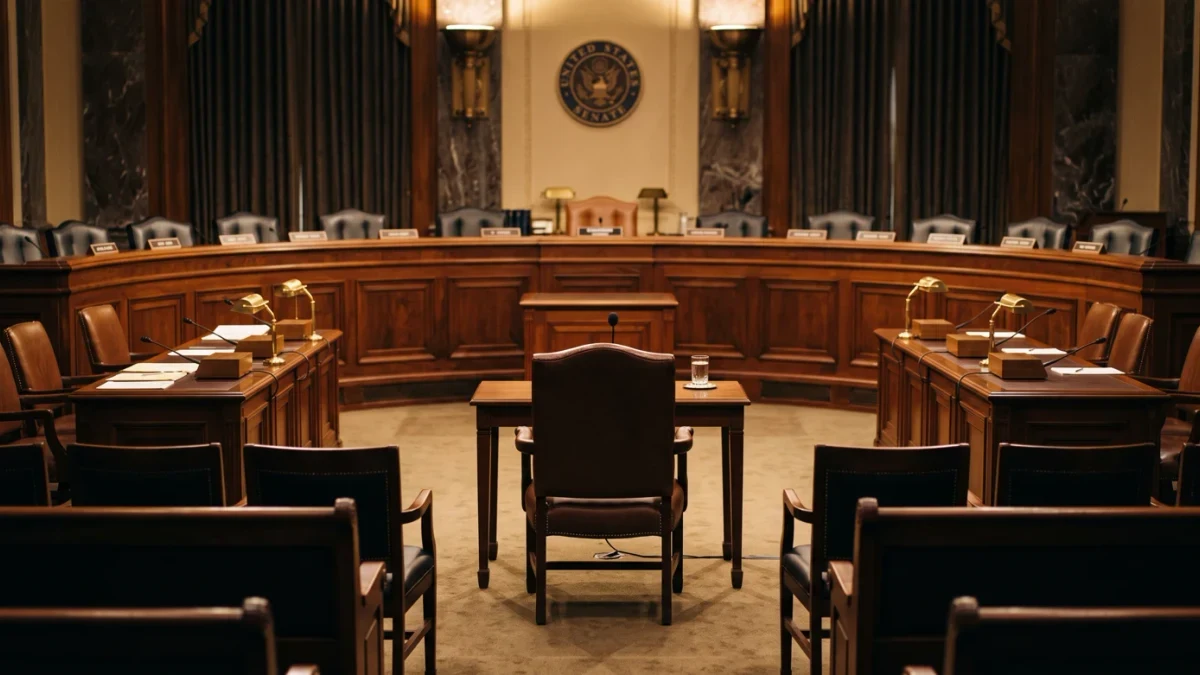
The committee collects the nominee's questionnaire, financial disclosures, American Bar Association rating, and FBI background file; holds a hearing where senators question the nominee; then votes to report the nomination favorably, unfavorably, or without recommendation. Any of the three outcomes sends it to the floor — reporting is a gate, not a grade. A tie or no vote leaves the nomination pending in committee, where it dies at the end of the Congress if not discharged.
What happens on the Senate floor?
The majority leader asks consent to take up the nomination; any senator can object, forcing cloture. Since November 2013, cloture on judicial and executive nominations needs a simple majority — the change Majority Leader Harry Reid's Democrats made for most nominations, which Majority Leader Mitch McConnell extended to the Supreme Court in 2017. Post-cloture debate is capped at 30 hours for circuit and Supreme Court nominees but just 2 hours for district judges under the 2019 resolution, which is why district judges often confirm in late-night batches by voice vote.
How long are the waits?
Timing splits sharply by court level. District nominees with two supportive home-state senators can clear in two to three months; contested circuit nominees routinely take six months to a year, and Supreme Court vacancies compress to weeks — Justice Amy Coney Barrett was confirmed 30 days after nomination in 2020, the fastest for a Supreme Court seat since 1993, per Senate records. Roll-call vote margins on contested circuit nominees in the 2020s have been largely party-line.
What happens if the Senate doesn't act?
Nominations lapse at sine die adjournment and must be resubmitted in the next Congress — a routine second life for many judges. Meanwhile, the vacant seat loads the docket onto remaining judges or, for district courts, a panel of visiting judges, and the Administrative Office of the U.S. Courts declares some seats «judicial emergencies» based on filings per judgeship.
Why do circuit seats matter more?
District judges try cases one at a time; the thirteen courts of appeals set binding precedent for entire regions — often the last word, since the Supreme Court hears roughly 60 to 80 argued cases a year out of thousands of petitions. A single circuit seat can flip the panel composition, and with it the law of several states, which is why both parties fight hardest over these nominations.
FAQ
What is a blue slip?
An opinion sheet from the Judiciary Committee sent to a nominee's home-state senators; returning it negative has historically blocked district nominations, though committee chairs differ on enforcing it.
Can a nomination be filibustered?
Not effectively: since 2013–2017 rules changes, cloture on any judicial nomination needs only a simple majority.
What is a judicial emergency?
A vacancy the Administrative Office designates when weighted caseload per active judge exceeds thresholds — currently filling hundreds of seats nationwide, per the U.S. Courts' vacancy notices.