Extended analysis of political cause and effect: how coalitions form and break, why a governing party loses support, where institutional design blunts a mandate. Arguments are built from results, roll calls and comparative cases. Intended for analysts, academics and readers who want reasoning instead of reaction.
From 5 percent of the last gubernatorial vote to distributed county requirements, the qualification rules filter which questions citizens ever get to vote on — and the filters are tightening.
A four-point lead with a three-point margin of error is a coin toss — and weighting choices, likely-voter screens and subgroups mislead far more often than sampling noise does.
Daily returns show who has returned ballots, not who is winning; the numbers are administration data, and reading them as a scoreboard produces the same error every cycle.
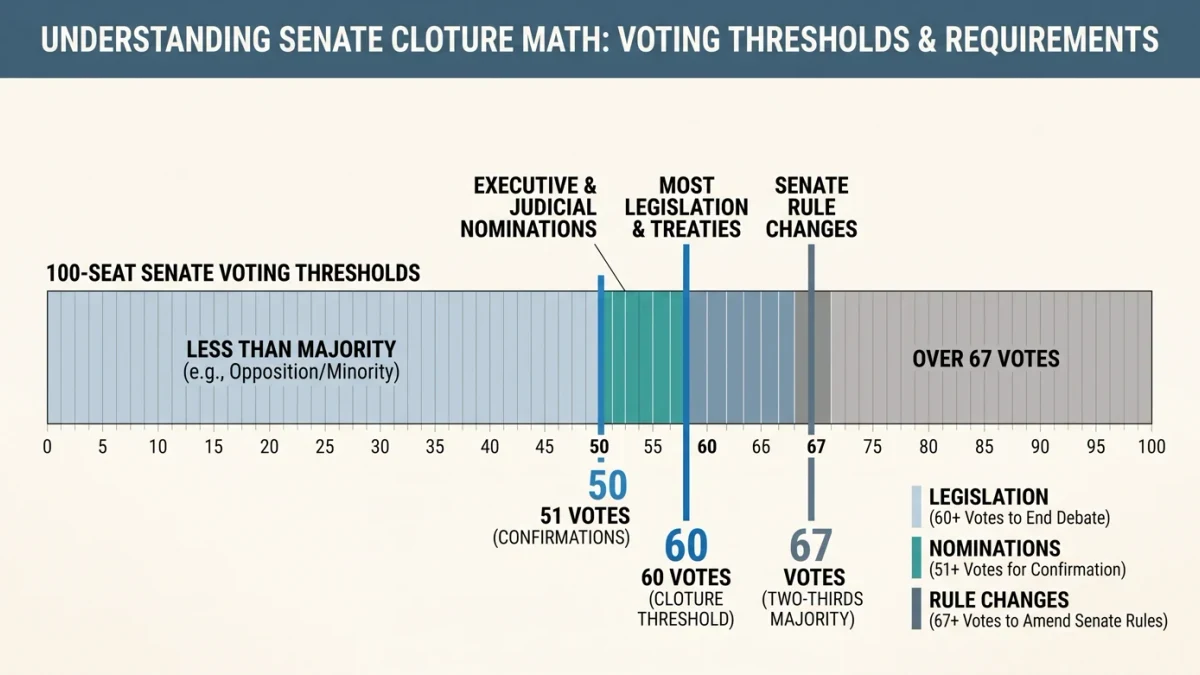
Cloture's 60-vote threshold governs nearly all Senate lawmaking, and every proposed reform — carving out exceptions, going nuclear by precedent — has a constituency that evaporates the moment the chamber's majority flips.
Two decades of commission-drawn districts in the biggest states produced tighter races and more litigation — not an end to map wars, but a change in their rules of engagement.