Assessment of governing programs against the machinery available to enact them. Pieces separate measures achievable by executive action from those requiring legislation, price them against fiscal rules, and identify the veto points ahead. Read by legislative staff, lobbyists, journalists and researchers tracking implementation.
The Secretary of Health and Human Services can approve anything that «promotes the objectives» of Medicaid — a phrase that lets each administration's policy preferences reach the states, five years at a time.
Since 2021 House members request funded projects in public letters, capped at 1 percent of discretionary spending, with conflict-of-interest certifications and ban on for-profit recipients.
When appropriations lapse, the Anti-Deficiency Act sorts every federal employee into excepted, exempt or furloughed — and the definitions, not the headlines, decide which services stop.
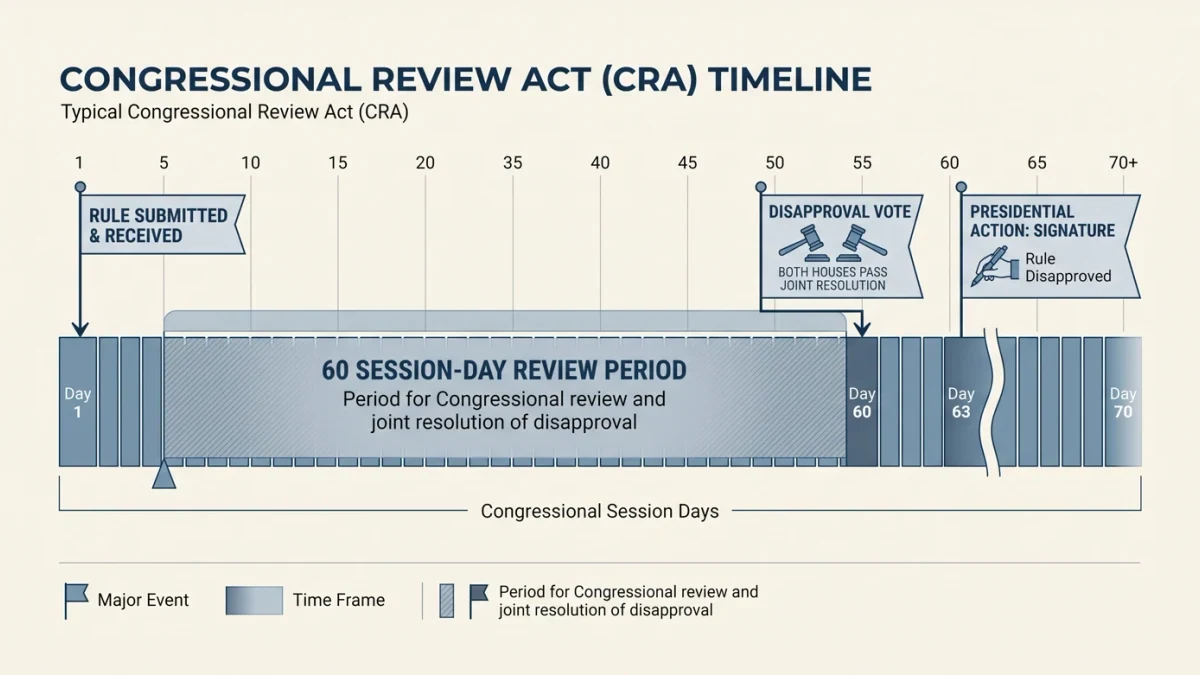
The CRA gives Congress a filibuster-proof, presidential-signature path to erase recently finalized regulations — and a bar on the agency issuing anything substantially similar ever again.