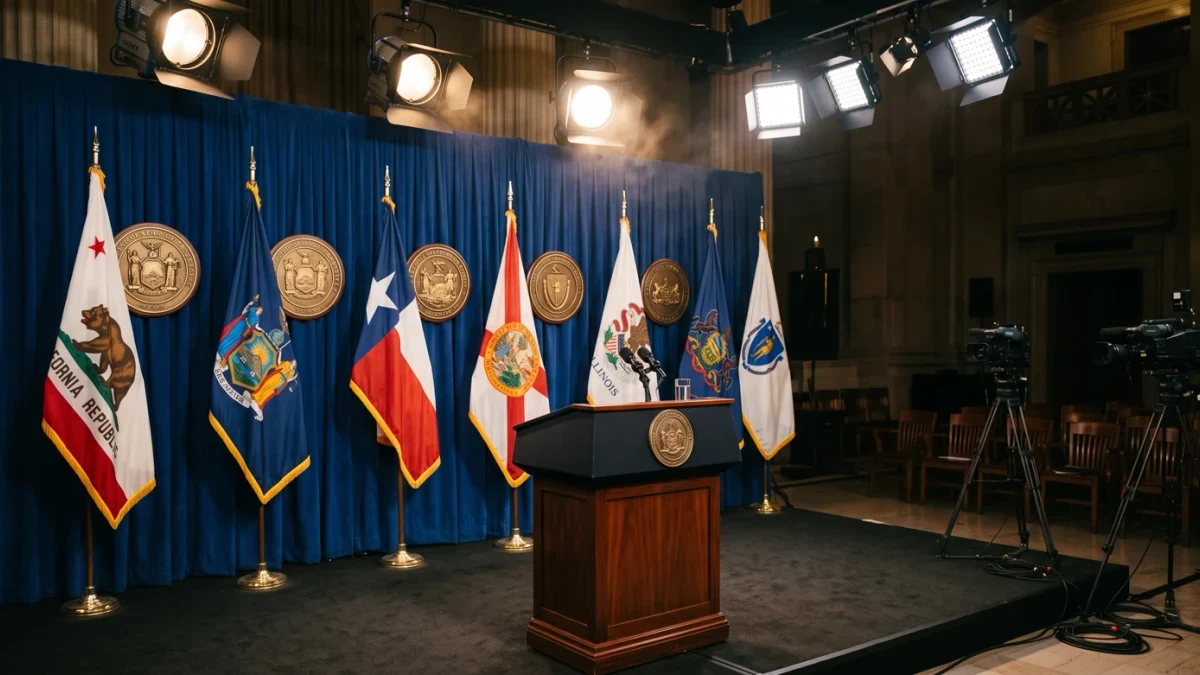
How do multistate lawsuits work? State attorneys general of like-minded states — typically led by one drafting office — file a single complaint in a chosen forum, each state asserting its own sovereign and quasi-sovereign interests: injury to its residents, costs to its treasury, and the dignity interest in not being subjected to unlawful federal action. The vehicle has become the dominant form of state-federal conflict: Republican-led coalitions sued the Biden administration dozens of times (on immigration, student loans, environmental rules), and Democratic-led coalitions did the same to the first and second Trump administrations — over one hundred such suits in each direction over the last decade, per tallies maintained by state-AG watchers.
Why states have standing where citizens don't
State standing is its own doctrine: under Massachusetts v. EPA (2007) and its progeny, a state invoking its sovereign status is entitled to «special solicitude» — losing land to rising seas counted, and by extension states' injuries from losing federal grants, bearing illegal rule burdens, or paying enforcement costs count too. That is the multistate suit's structural advantage over private plaintiffs: states can aggregate quasi-sovereign harm to millions of residents into one justiciable claim.
How forum selection drives outcomes
Congress channelled most challenges to federal agency action into the federal courts of appeals, where venue lies in the circuit where the challenger resides or has its principal place of business — which is why coalitions include at least one state in a favorable circuit. Challenges to federal rules go straight to circuit courts (no district court first), and the circuit's precedent set — some circuits scrutinize agency power more aggressively — materially changes win rates. Both parties' coalitions shop with equal diligence; the practice is symmetrical, and openly discussed.
What remedies the suits pursue
- Vacatur: setting aside unlawful rules nationwide — the APA's standard remedy, contested before the Supreme Court in 2024 in the DOJ v. San Francisco case, which the Court dismissed without deciding — leaving the scope of «universal vacatur» live in the lower courts.
- Injunctions: preliminary relief halting enforcement while litigation runs.
- Consent decrees: in state-versus-corporate suits, negotiated settlements that function as industry-wide regulation — the tobacco master settlement being the archetype.
- Declarations: symbols with leverage, ordering nothing but framing future enforcement.
State-versus-industry suits
The other half of the docket: AGs suing companies — opioids, vaping, data privacy, antitrust — where coalitions pool investigative resources and settle en masse. The corporate side's recurring objection is the democratic one: policy by consent decree, made by officials elected statewide, never run through any legislature. The AGs' answer is that they enforce the states' existing consumer-protection and antitrust statutes, which is litigation, not lawmaking.
FAQ
Why can states sue where citizens can't?
Sovereign and quasi-sovereign interests — injuries to their residents and fisc — receive «special solicitude» under Massachusetts v. EPA.
What is universal vacatur?
Setting aside a federal rule for everyone, not just the plaintiffs — the APA remedy whose scope remains contested.
Do these suits usually succeed?
Outcome rates depend heavily on forum and posture; both parties' coalitions have substantial win records in their chosen circuits.