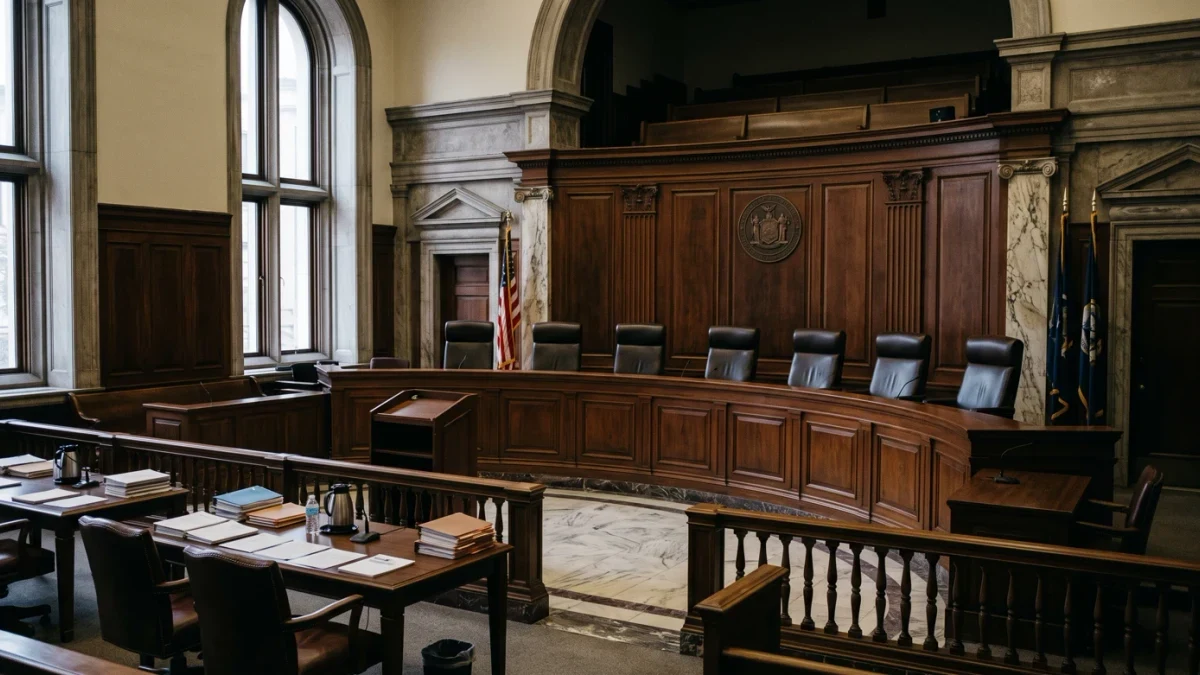
Judge Chris Taylor of the Wisconsin Court of Appeals won the state Supreme Court seat on April 7, 2026, defeating fellow Court of Appeals Judge Maria Lazar by roughly 20 percentage points in election-night tallies, per results reported by the state's county clerks and national election desks. The outcome takes the seven-member court's liberal-affiliated majority from 4–3 to 5–2 when Taylor takes her ten-year seat — pending the routine county canvass that makes the result official.
What the court's balance actually controls
Wisconsin's Supreme Court decides the state's legislative and congressional maps, the boundaries of administrative power, and election-administration disputes in one of the country's closest battleground states. A 5–2 alignment reduces the swing-seat character of future races: one retirement no longer flips control, which changes both parties' recruitment and spending calculus for the next judicial election cycle.
How the race ran
Nominally nonpartisan by statute, the race was in practice party-aligned, as Wisconsin's judicial elections have been since the 2019–2020 period — the 2023 and 2025 Supreme Court contests set national spending records for judicial races, and outside groups on both sides engaged comparably in 2026. Both candidates advanced from the February 17 primary. Under state law, the seat carries a ten-year term with no incumbent running.
What happens next procedurally
- Canvass: counties certified official results in the days after the election; the state canvass follows.
- Investigation and recounts: a losing candidate may request a recount where the margin is within 1 percentage point of the votes cast for the top two candidates, at state expense inside 0.25 percent; the roughly 20-point margin placed that far out of reach.
- Seating: the winner takes office under the schedule set by state law, joining the court's next argument calendar.
The procedural consequence
The result lands eight months before the November general in a state expected to host marquee statewide races. Both parties read April turnout and the county-level margins as an organizational signal — with the caveat this publication always carries: a spring judicial electorate differs in size and composition from a November one, and a 20-point court race margin is not a forecast of anything in the fall.
FAQ
Are Wisconsin Supreme Court races partisan?
Formally no — candidates run without party labels; in practice campaigns and outside groups align visibly with the parties.
When does the recount right apply?
Within a 1-point margin of the top two vote-getters; margins inside 0.25 percent are recounted at state expense, larger ones at the requester's cost.
How long is the term?
Ten years, with the seat next before voters in the mid-2030s.