Illinois held the country's first partisan primary of 2026 on March 17, with polls closing at 7 p.m. local time and election-night returns reported through the evening by the state's county clerks and aggregated by national results desks. Early returns showed incumbent Democratic Representative Jonathan Jackson uncontested in his party's primary in the 1st Congressional District, while the Republican side of that district's ballot showed Christian Maxwell leading the field with roughly 64 percent in initial tallies, per NPR's results pages as of election night. All results remain unofficial until the state canvass.
Why Illinois goes first
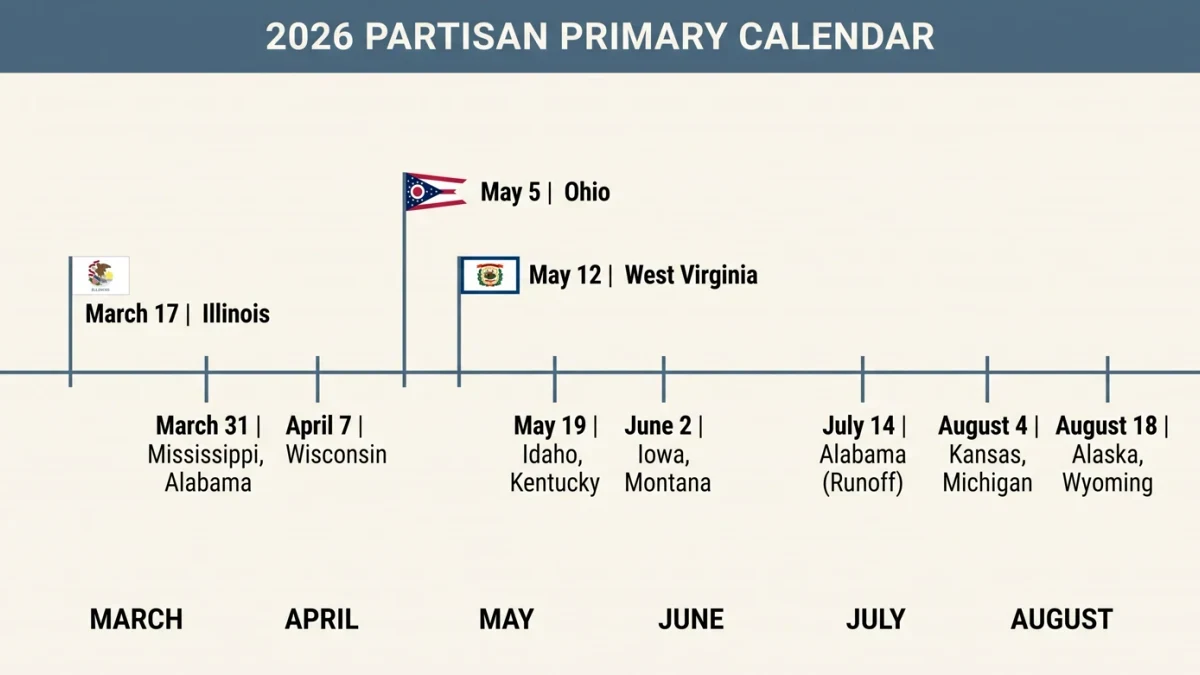
Illinois moved to a March primary years ago to comply with federal military-and-overseas ballot transmission deadlines, and its position gives it outsized procedural weight: it is the first test of every national party's 2026 field operations, and its filing window — closed back in October 2025 — means the candidate lists were locked earliest. The next partisan primaries follow in spring: Ohio on May 5 and West Virginia on May 12, per each state's 2026 election calendars, with the bulk of states voting May through August.
What was on the Illinois ballot
All 17 of the state's U.S. House districts, the statewide party nominations for governor and other executive offices, and state legislative seats. Down-ballot, the primary decides general-election fields in a state where a handful of competitive districts — concentrated in the Chicago suburbs and downstate — are expected to draw national spending in the fall, per the state's recent certified results and national race ratings.
What happens next, mechanically
- Canvass: county clerks and election authorities certify official results within roughly two weeks; close races within statutory margins trigger discovery recounts automatically.
- Certification: the State Board of Elections certifies nominees to the general-election ballot.
- Federal timeline: general-election ballots to military and overseas voters go out 45 days before November 3, anchoring the fall calendar.
The procedural consequence
The first primary of the cycle is less a national signal than a local machine test: Illinois's own governor's race and its handful of swing districts will be contested in November regardless of tonight's margins. What March 17 fixed is the menu — the names and party labels voters will see in the fall — and in the 1st District's Republican race, a nominee emerged from a field election-night tallies showed Maxwell dominating.
FAQ
When do the results become official?
After the county canvass and certification by the Illinois State Board of Elections in the weeks following the primary; election-night numbers are unofficial.
Why was Illinois first in 2026?
Its March date keeps the state ahead of the 45-day federal deadline for sending general-election ballots to military and overseas voters.
What is a discovery recount?
An Illinois procedure automatically triggered in close races, letting candidates inspect ballots in selected precincts before deciding whether to seek a full recount.