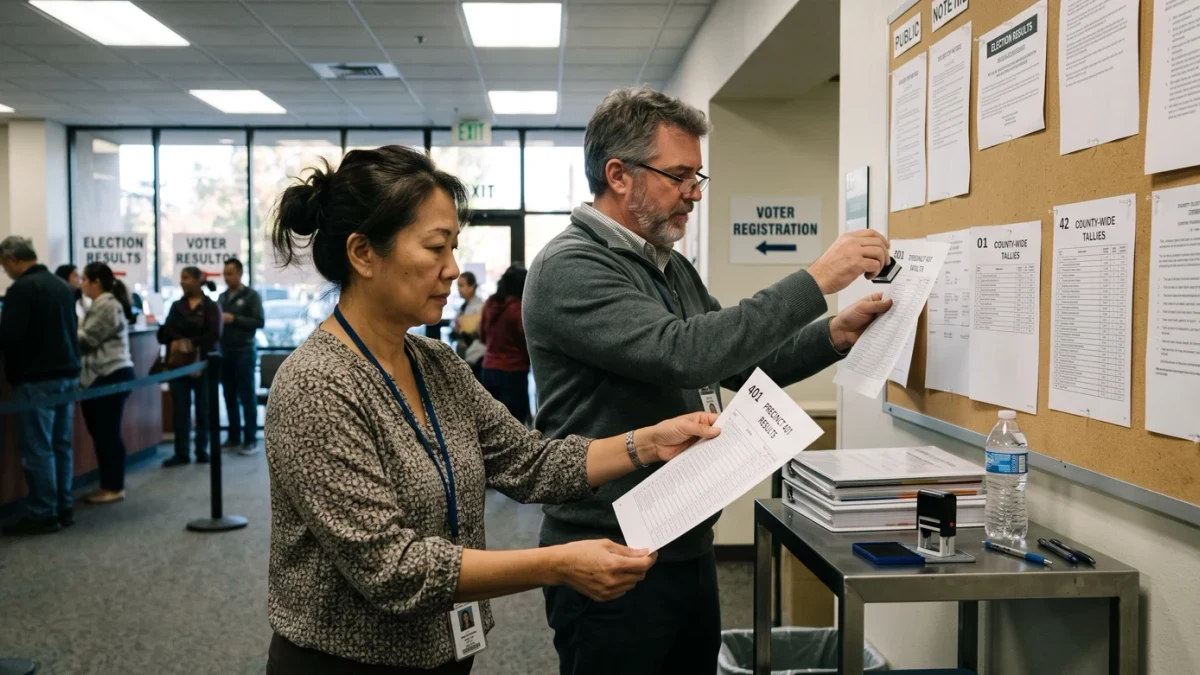
The 2026 primary calendar's June stretch crested across two Tuesdays: June 2 in California, New Jersey, New Mexico and other states, and June 9 in Maine, North Dakota, Nevada and South Carolina, with results pages from the Associated Press and state election offices filling in the fall's fields. The headliner was California's open governor's race — Governor Gavin Newsom is term-limited — a contest whose June 2 primary ran under the state's top-two rules, sending the two leading vote-getters regardless of party to November, per the California Secretary of State's election calendar.
What the June primaries decided
New Mexico's June 2 primary drew 24.6 percent turnout — 346,460 ballots cast, per the Secretary of State's official results — a figure typical of the state's midterm primary participation. New Jersey's county clerks certified their June 2 results by June 12, the routine two-week canvass that converts election-night counts into official nominees. California's counties were still processing and certifying late-arriving vote-by-mail ballots in the weeks after June 2, as the state's postmark rules allow ballots received days after Election Day to count.
Why June mattered most for the House map
California holds more congressional districts than any other state, and its top-two system can lock November's general into same-party runoffs in heavily one-party districts — the procedural reason national watchlists follow the June 2 count so closely. Nevada and Maine, both competitive states, set their Senate and House fields on June 9, in races decided by plurality nomination.
What happens next
- Certification: state canvasses close out June's results through late June and early July.
- General ballot construction: nominees feed the 45-day military-and-overseas ballot clock for November 3.
- Remaining primaries: the calendar runs through late August, with the last filing deadlines (Louisiana, August 7) and final primaries closing the qualification season.
The procedural consequence
With the June waves past, the fall's House and Senate fields are mostly known — which moves the action to three places: state canvass disputes where margins are thin, substitution rules where nominees withdraw, and the general-election ballot-access litigation that follows map changes in states still redrawing. The primary season's remaining contests matter locally, but the competitive core of November 2026 is now on paper.
FAQ
What is a top-two primary?
A system — used in California and Washington — where all candidates appear on one ballot and the top two vote-getters advance, even if from the same party.
Why do California counts take weeks?
Ballots postmarked by Election Day may arrive and be counted for seven days, and signature verification adds processing time.
When is the last 2026 primary?
The calendar runs into late August, with Louisiana's August 7 filing deadline the final qualification date for its November blanket primary.