The National Labor Relations Board formally withdrew its 2023 joint-employer standard and reinstated the narrower 2020 rule in a Federal Register document published February 27, 2026 — a reversal that determines when two businesses share legal responsibility for the same workers, and one of the most consequential labor-policy moves of the first quarter. The withdrawal, paired with a Labor Department move on worker classification, retraces a regulatory pendulum that has now swung with each administration since 2015.
What the joint-employer standard decides
The question is which entities must bargain with a union and answer for unfair labor practices. Under the reinstated 2020 rule, an entity is a joint employer only if it exercises substantial direct and immediate control over essential employment terms — hiring, firing, wages, supervision — exercised in a non-limited manner. The withdrawn 2023 standard had reached companies with merely reserved or indirect control, a formulation franchise systems and subcontractor-dependent industries had challenged in court.
What it means for business structures
- Franchisors: brand standards and training alone no longer point toward joint-employer status under the restored test.
- Staffing and subcontracting: liability follows actual, exercised control over essential terms, not contractual reservation.
- Unions and workers: bargaining leverage shifts to whichever entity directly employs — a narrower target set.
- Litigation exposure: pending cases will be adjudicated under the restored standard, and the agency's general counsel has discretion over which theories to pursue.
Why the pendulum keeps swinging
Because the standard lives in agency rulemaking rather than statute, each board majority rewrites it. The 2015 Browning-Ferris doctrine was replaced by rule in 2020, replaced again in 2023, and now withdrawn in 2026 — with court challenges accompanying each turn. Businesses planning multi-year contracts should assume the definition is one election away from changing again.
The SEC's parallel move
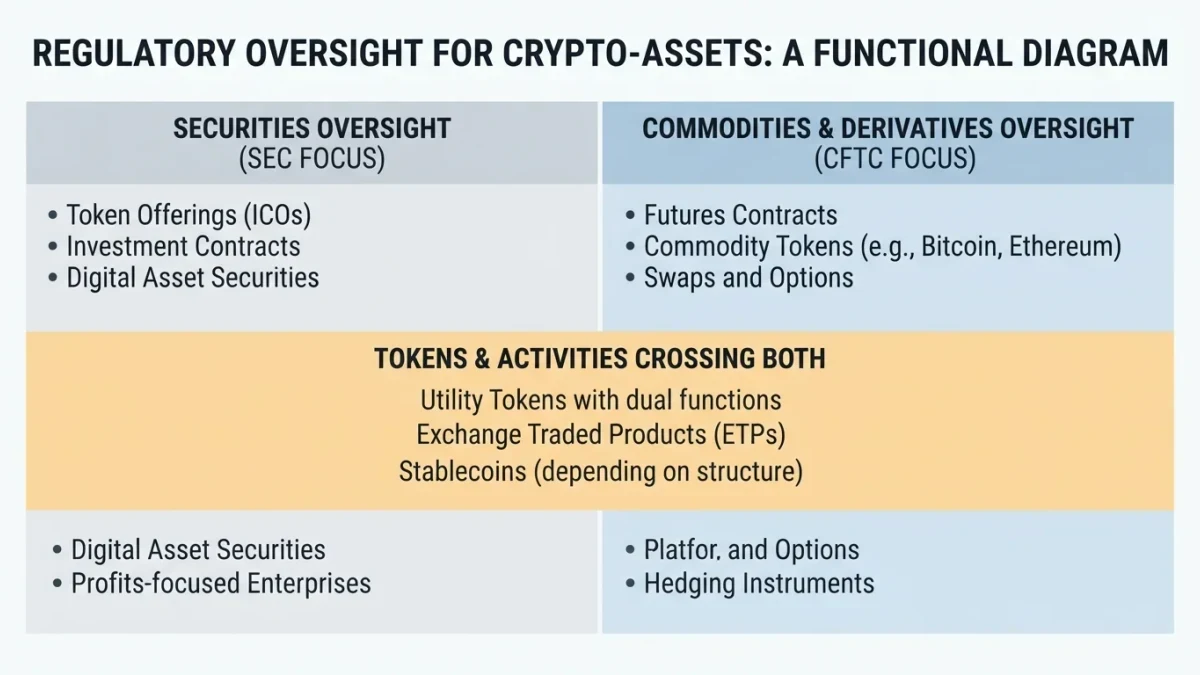
Separately, on March 17, 2026, the Securities and Exchange Commission issued a proposed rule and interpretation on the application of federal securities laws to certain crypto assets and transactions (docket S7-2026-09, per the SEC's rulemaking activity page) — beginning a notice-and-comment process whose comments, not the press release, will shape the final text. The SEC's enforcement division had already reorganized its posture in a February 24 Enforcement Manual update requiring commissioner-level approval to open formal investigations.
The procedural consequence
Both actions are process milestones, not final law. The NLRB rule is effective as published but challengeable in court under the Administrative Procedure Act; the SEC proposal is not effective at all until finalized after comments. Compliance calendars should mark two dates — February 27 and the SEC comment docket's closing date — and read the Federal Register texts rather than summaries.
Political Digest publishes information, not legal advice.
FAQ
What is joint employment?
A situation where two businesses share responsibility for the same employees' terms and conditions — triggering joint bargaining and liability duties under the NLRA.
Is the 2020 rule final?
It is reinstated and effective per the February 27, 2026 Federal Register document, but like any rule it can be challenged as arbitrary and capricious or rewritten by a future board.
What does the SEC crypto proposal do?
It proposes how securities laws apply to certain crypto assets and transactions; nothing changes until the rule is finalized after the public comment period.